
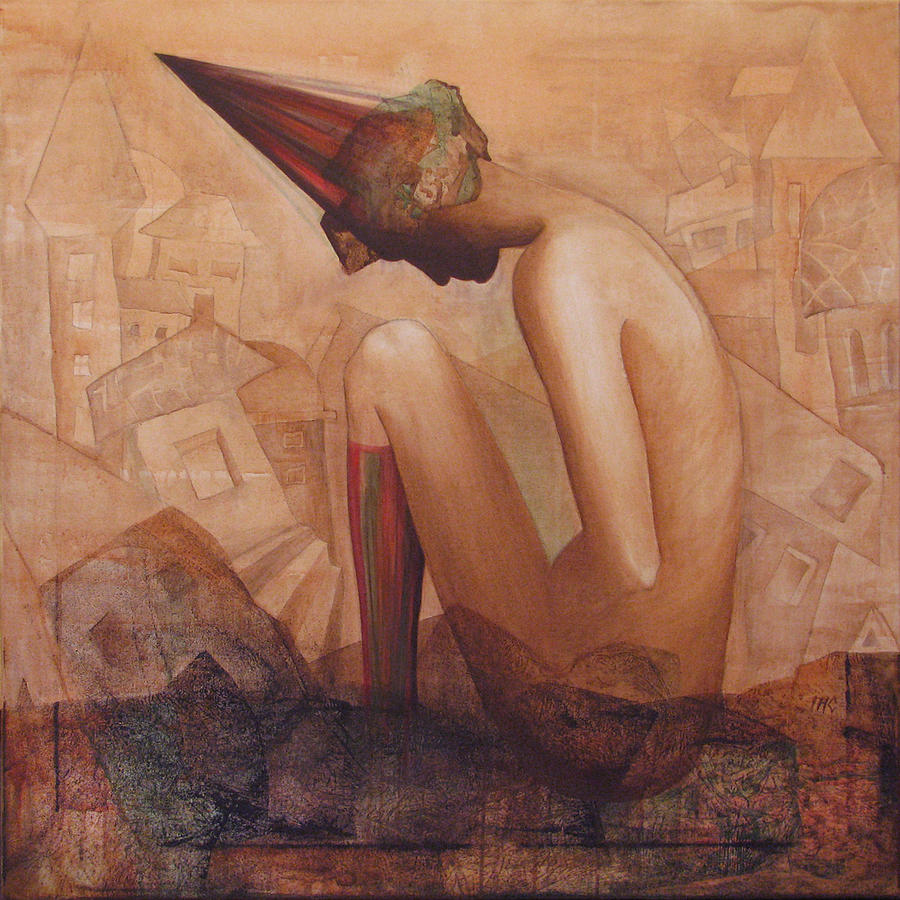
“Separation is the alpha and omega of spectacle (Debord, 1967).”
The first, most important single element to grasp about today’s state of affairs, the reality we are currently entrenched in, is the ubiquity of alienation, that is, separation from our food, others, and ourselves: the subject-object duality.
The second essential idea to grasp, is that within a society of spectacle, there is that which seeks to retain the subject-object duality for political reasons that is, reasons related to gaining and maintaining power.
Third, it is in activity that this separation, this fundamental duality, which is the alienation and separation between an inner and outer reality, between “you” and “I”, between “us” and “them”, between subject and object, between theory and praxis, is unified.
Fourth, “agents of the spectacle” are those celebrities or “stars” who, denying their individuality, embrace the role of OBJECTS to spur others to buy, consume and believe the spectacle they are paid to promote. These “stars” have renounced their freedom. They fear individual action while trying to project the illusion that they are acting creatively and freely. They succeed only insofar as they are believed by those who view them: the spectators (or “fans”). But the simple reality remains, they are promoting an illusion. Nothing more. They are liars (lying to themselves as well as others) selling a lie. Their only true value, the work they are rewarded for doing, is the hollowing out of their humanity in order to create space for an illusion.
Applied to Surfing
Consider for a moment, the feeling of riding a wave on a surfboard. Now consider the feeling of sitting in front of a computer or a television and watching others surf. What feelings are evoked? How do they differ?
When one surfs, there is a feeling of satiety, of being fulfilled. When one watches surfing, there is a feeling of desire, of wanting to surf… even more so, of surfing the same locations one is viewing, of surfing like the surfers one is watching. If one watches a video of surfing amazing waves in Fiji and then surfs their local beach break which happens to be junk, does this desire go unfulfilled? Is there not a sense that what one has is not enough, is less than ideal? This desire, this yearning, and the feeling of “not enough” is the result of a separation from the activity and an insertion of a spectacle of what one does not have.
Additionally, the feeling for a non-surfer when viewing surfing is different from a surfer who views surfing. What is unattainable for one is attainable and carries an experiential context for the other. Skill level plays a key role in the experiential context. To break it down further, those who do not have the money to travel will certainly feel the impact of the unattainable dream.
From the point of view of those who produce the image of surfing, it is essential that those who do not surf, but buy surf products, remain non-surfers, or at the very least, remain only occasional surfers. Those who cannot afford to travel to the best waves, yet desire what they view, function in the same way as non-surfers… the way these groups reach out to the dream, the way they cleave to it, is by identifying with it by wearing the image themselves. They buy into the image, quite literally.
This is the exact moment the “agents of the spectacle” come into play. Agents (or sponsored surfers) model a fragmented happiness, a specific formula for the fulfillment of the joy that is unattainable by those who desire it exactly because it is unattainable, because they are separated from an imagined joy. The agents project an image that is unchanging, that is valuable only insofar as it is the illusion that is expected. This illusion is controlled by those selling the image. If an agent strays too far from this image (in deed, age, or size) they are dropped from the view of the spectators, else the imagined joy, the illusion of the promise of fulfillment, be damaged.
“The agent of the spectacle placed on stage as a star is the opposite of the individual, the enemy of the individual in himself as well as in others. Passing into the spectacle as a model for identification, the agent renounces all autonomous qualities in order to identify himself with the general law of obedience to the course of things. The consumption celebrity superficially represents different types of personality and shows each of these types having equal access to the totality of consumption and finding similar happiness there. (debord, 1967)”
Those who produce their own joy, rather than purchasing representations of an imagined joy, have more autonomy. This autonomy, this individuality, is freedom from desire. This freedom is not conducive to the separation that sells products… desire sells products (not sex!). Surfers who have the means and the freedom to do the activity, emulate nothing… they engage in praxis. While they may admire other surfers for their ability, they do not set out to become the image that Big Surfing projects. There is no need… there is no void that Big Surfing can fill, no unfulfilled desire. The activity of surfing itself satisfies*. For those who are not so satisfied, the race to the “next, best, new!” is perpetual.
“You could not step twice into the same river; for other waters are ever flowing on to you.” -Heraclitus; quoted by Plato in Cratylus
Human action is immeasurably unique in every instance, that is, when a human acts, s/he never acts exactly the same. Time, space, situation, context… all of these shift and change, even as the individual shifts and changes from moment to moment. But the images provided, the commodities, the fashion, the video games, etc. do not change of themselves. They must be constantly re-imagined, endlessly re-vivified else the flow of capital (power!) shift back into the hands of the autonomous. Returning to the same image, one gets a sense of the stagnation of fixed and separate illusions. All around us, life moves, changes, shifts… except those things that are taken out of the realm of the living. This is why there is so much emphasis placed on “the newest!” The spectacle and the illusions that are created in order to pull the individual away from authentic living (a realm within which an individual might encounter their ability to satisfy and fulfill themselves), must mimic the living as nearly as possible and do so with a gusto. The fervency of advertising and marketing that changes with the seasons (the seasons!) seeks to replicate cycles that the human being naturally responds to in the living world.
“It is wise to listen, not to me but to the Word and to confess that all things are one.” -Heraclitus of Ephesus (c. 535 BCE -475 BCE)
The question that is of the essence revolves less around the image that is created and sold, for this is simply the symbol of a greater sickness that permeates our culture. More daring is it to ask how we make ourselves the victims of such desires, how we give our power away, trading it first to the heavens and then to objects in front of us. More cunning still is the individual who sees that the path to freedom lies not in some ethereal “now” (if we could only realize it more perfectly!), or in the mind of some omnipotent god, or in the acceptance of others, but in his/her own grasp…
if he instead, chooses to close his fingers upon
his own open, upheld, and seeking palm.
(*This is not simply theory. That surfing is an activity that participating in, engaging with, can itself bring wholeness to a fragmented individual/self is most dramatically illustrated in the extreme cases of those who suffer from PTSD induced by war. See Ocean Therapy.)
Resources:
Society of the Spectacle by Guy Debord, 1967
The Concept of the Spectacle by Anselm Jappe


Leave a Reply