


I have been working the last few weeks on the presentation I will be giving at the Women in Boardsports retreat. Browsing through the websites of the major surf brands and surf media websites has been a tedious, albeit enlightening, experience. I have intentionally distanced myself from the mainstream surf industry (brands, retail stores, media, films, …) for myriad reasons, not least of which is how women are portrayed.
Many years ago, a dear friend approached me after I had re-emerged from one of my infamous disappearing acts. After giving me a big, bearded, bear hug, he gazed deep into my eyes:
“Surfing isn’t enough for you, is it? You don’t care about it, do you?” I dropped my eyes and nervously repeated an old habit, picking at my cuticles. I nodded my reply. Perhaps, yes…
Today, I have a different insight. I cared too much but didn’t have the tools or the language to explain what and why I ran from surfing so often. It wasn’t just about escaping from the world of competition and sponsorship, it was my inability to separate the act of surfing from the concentric circles that spin out from it, as well as being unable to clearly speak about what made me uncomfortable about those outer rings, the rings the uninitiated so often see as “Surfing.”
Attaining the tools and the language to analyze and discuss what previously had been relegated to nebulous, yet visceral, feelings of discomfort, has done much to successfully shift me away from a learned helplessness taught prolifically in sponsored/competitive surfing.
Surfing is its own institution, replete with cultural norms, hierarchies, stratifications, gatekeepers and agents of socialization. It is, itself, a marginalized sport within the larger social institution of Sport. Much of the work done by those who study sociological trends tend to focus on the heart of sports when analyzing sports media, race, gender and socio-econmic disparities throughout the institution. As such, little, if any, of the most important analyses and sociological research has penetrated the formal surfing world.
Informally, positive change has occurred in the line-up, due mostly to individuals who have been open to change: smaller group dynamic, greater efficacy of change. This, more than anything, is why I choose to separate Big Surfing (those concentric circles) from surfing itself (the core sphere). What is presented in Big Surfing does not reflect the experience, by and large, of the individual or the line-up. There are the occasional exceptions, of course (the Grump, the Bully, the Racist, the Misogynist…), but these are just that… exceptions.
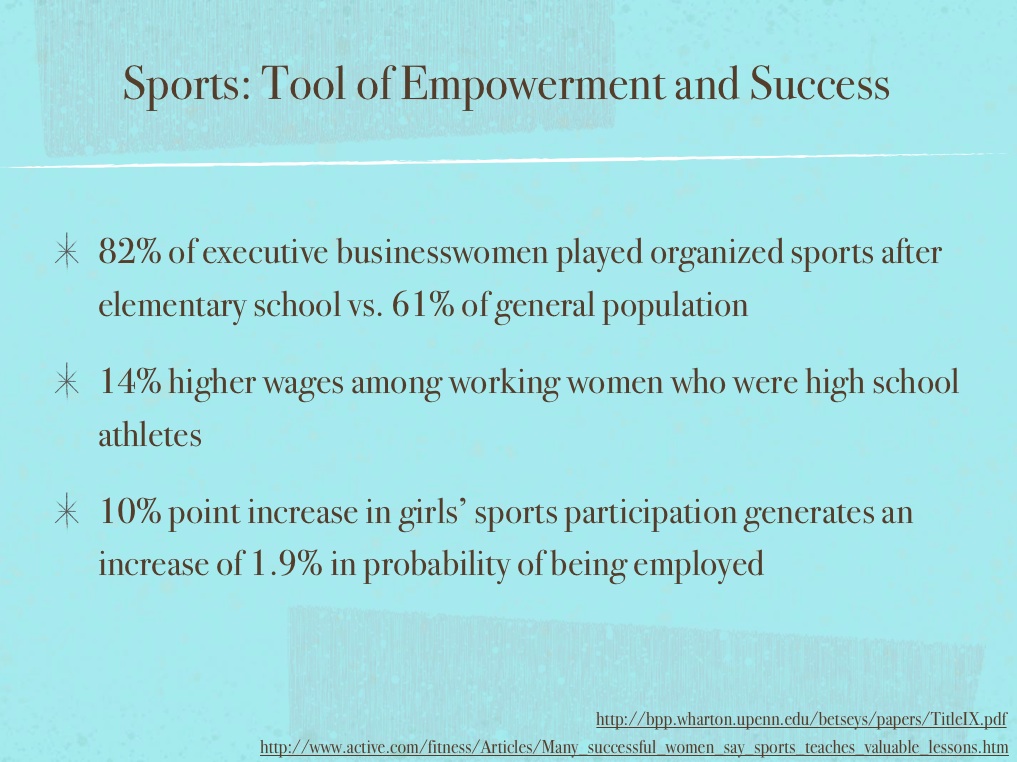
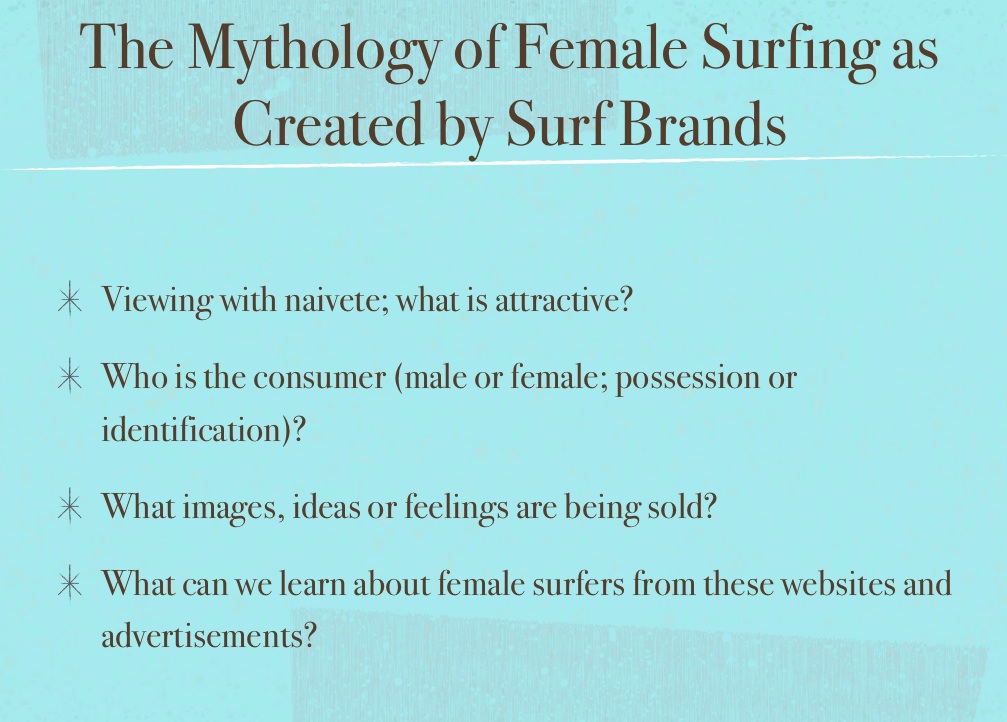
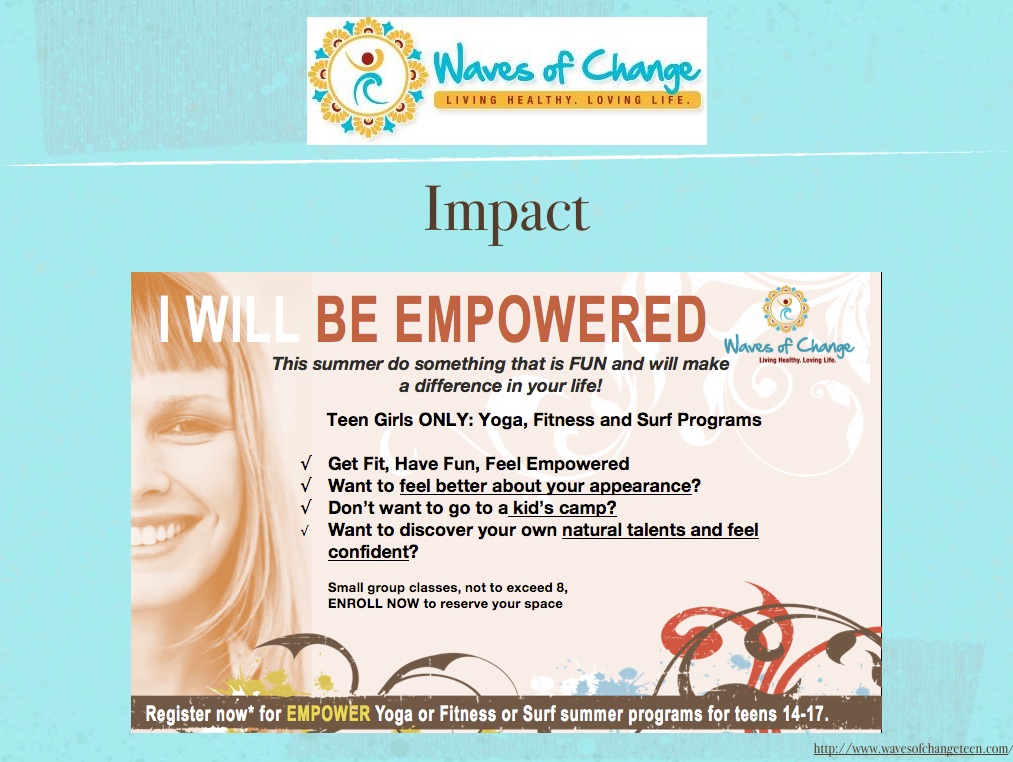
These last few weeks have been quite an amazing journey, from the opportunity on offer from sport (e.g. a disproportionate number of highly successful women participated in sports beyond elementary school) through how surf media and surf brands present young women and girls, to offering concrete solutions through surfing.
I might have to trim the presentation, but I now have a clear, linear picture to present, a unified train of thought to offer. I’d like to be able to add it to the ongoing conversation so that Big Surfing is no longer outside of the spotlight, but illumined by it. One positive aspect of Big Surfing engaging more and more within the realm of the mainstream sports institution is that it will be forced to confront and deal with its own biases and disparities.
I once ran from engaging at any level with surfing. Now, I am committed to it. I’m not buying the “if you don’t like it, walk away” mentality. This is akin to ignoring the issues and I am of the belief that the status quo is maintained in just such a fashion. Doing nothing is all it takes to perpetuate the status quo (and there is plenty of this going on in many different spheres at the moment).
Proliferating Stereotypes for Profit
Below are four of 40+ slides for the presentation (one from each section) I will be giving in Saas Fee, Switzerland, September 27-October 3:



Leave a Reply