
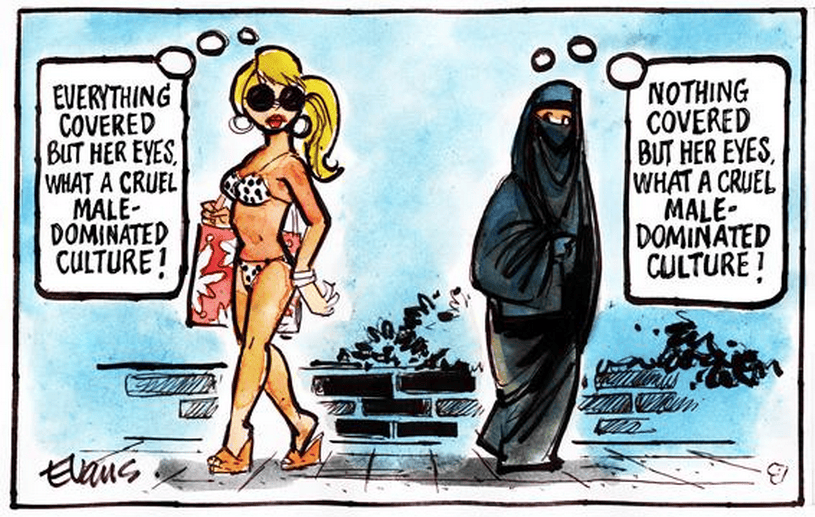
One task of Surfeminism is to analyze surf media and surf narratives. In this mode, we are able to distinguish Surfeminism from surf industry propaganda (often advanced second-hand by those who accept surfy propaganda) filtered through the image of the surfer girl. Surfeminism, as a tool, works to press into a solid (say, a story or a perspective) and open up fissures so that we can flow through and swim with the story and/or perspective with increasing insight about the power struggles that are often hidden from us. In other words, Surfeminism can be employed to problematize a text in order to more actively engage emerging stories about women in surfing.
It is vital to commend folks for making visible diverse stories about women in surfing, since it gives us unique opportunities to gaze at ourselves as female surfers in the world and come to new understandings of an activity many of us are so close to, it is often hard to gain the necessary critical distance from narratives to apprehend the values they evangelize. This is the power and opportunity of the stories of women from around the globe who come to surfing and connect with it for their own diverse reasons. Yet, none of these films or narratives emerges without having first been framed, consciously or unconsciously, through the lens of an already extant perspective of surfing mired in Global North politics.
These stories often tell more about the manufacturers of the stories (filmmakers, authors) and the viewers (audience/readership) than they do about the individuals they feature. Often these individuals stand for well-known subcultural characters and plots, like the surf hero who battles and overcomes demons (either inner or outer) to achieve a certain Western idea of success (money, fame, trophies); the surf love story (waves and women are often exchangeable in these narratives that revolve around male protagonists); the surf rebel who bucks the status quo and sets out on his (always) own to carve out a unique trail; the surfari; the newer narratives that couple the surfari with an evangelistic twist, that of spreading the gospel of The American Dream surfing.
“Surfing is probably the most democratic of all the images of ‘living the dream’ in American culture — all you need is a board and a beach and you’re a surfer.” -K. Lawler, The American Surfer p.145
For this analysis, we will look at the recent story of Nasima as told in Surfline’s July 23rd Gypsy Files in order to pull apart such concepts as “clothing as freedom” and the newest character to arise in surf storytelling that features “the oppressed, poor girl who just wants to surf.”
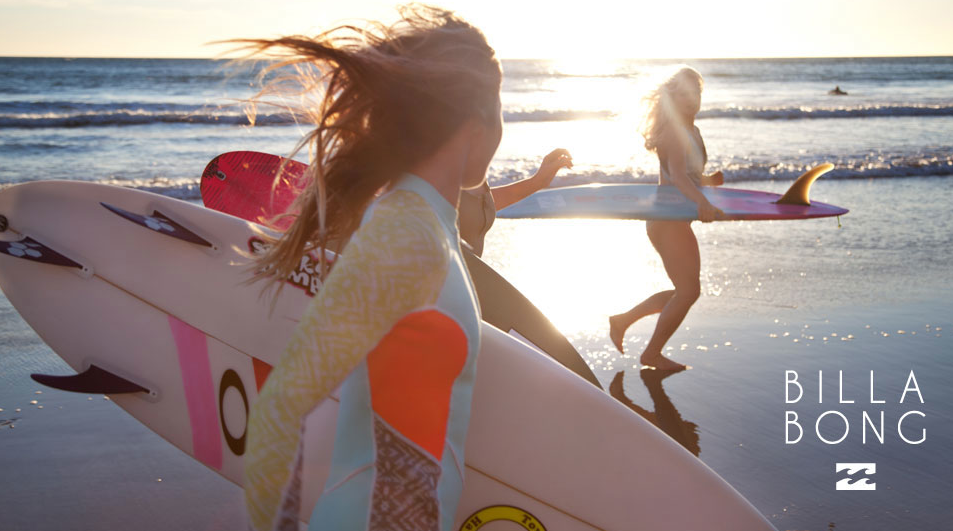
The first thing of interest to us in this analysis, is how the story itself is physically sandwiched between two Billabong images of white, carefree women. These ads show the aspirational fun, free and happy, white, long-haired blonde, fit image that we have come to expect from advertisements of women’s surfing in the Global North, an image that when presented in this manner with this story, creates both a parallel with and a polarization to the woman (and the film) we are about to be introduced to: Nasima, The Most Fearless (film trailer).

Surfy Clothes as Freedom
Clothing is mentioned in the editorial and highlighted throughout the piece in such a way that the article itself seems more a narrative about the clothing of surfing and the image of surfing in Bangladesh, than a story of Nasima. There is a very clear parallel in this narrative to the way that the clothing is often focused on by Global North folks in discussing the oppression of women in Muslim culture. As we speak about “freedom” here, we must continually challenge ourselves by asking if by freedom we mean “free to be like us.” Likewise, surf subculture finds itself in constant conversation about surfer girls and their bikinis. These dialogues around female surfers seem to always revolve around clothing; always around appearance.
We are presented in each frame with opposing images and opposing words: the Koran demands restrictions in clothing vs. the freedom offered through surf clothing; images of Bangladesh ghettos opposed to the ocean… Always the contrast of ideologies of oppression and freedom.

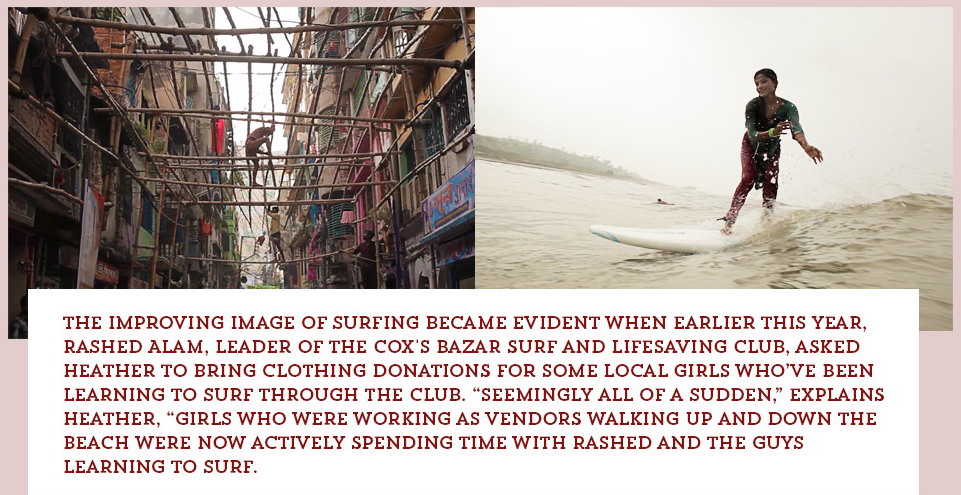
It is through commentary about the acceptance of surfy clothing and the desire for more surf clothing (brought by the filmmakers to the leader of the Cox’s Bazaar Surf and Lifesaving Club) that we are to believe must be proof that circumstances are getting better for local surfer girls in this area of Bangladesh. Many questions arise here: what if this man is using the young girl vendors-turned-surfers to sell these clothes and/or use them as rewards to raise capital for his surf club venture? Might these young girl vendors-turned-surfers be working for Rashed Alam in order to surf and/or to raise capital for Mr. Alam by enticing filmmakers with stories just like these? This “seemingly all of a sudden” (see below) in an area hungry for resources, visited by a (relatively) wealthy troupe of Western filmmakers bringing valued commodities and connected to one surf school, leaves far too many questions about how these exchanges affect the local community dynamics and already entrenched power hierarchies. We ought to engage watching the movie with these questions salient in mind.
In addition, this implied “clothing as freedom” narrative shields a deeper story of surf clothing manufacturing in Bangladesh and the concerted effort being made by the surf industry to break into Asian markets. Bangladesh is the second largest garment manufacturer in the world and many of our surf clothing is made there, under abominable conditions for the majority female workforce. For example, the VF Corporation, owner of REEF and VANS and lately rumored to be flirting with a possible buy-out of struggling Quiksilver Inc., refused to sign the Bangladesh Factory Safety Accord after fires ravaged unsafe factories, leading to another fire in one of its factories last month.
“Workers reported that although VF representatives had visited the factory in the preceding months, the company had not fixed these very dangerous problems and that they were worried about what would happen if there was a fire at the factory. Unfortunately, workers’ fears were confirmed last week due to VF’s inaction.”-June 27th, 2014
The Oppressed Girl Who Just Wants to Surf
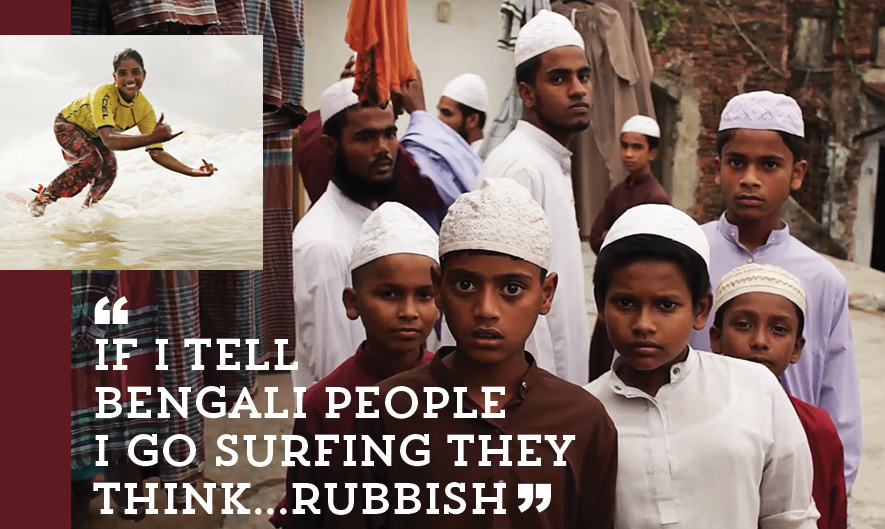
The fact that the character through whom this story is being told is “the oppressed girl who just wants to surf” illustrates an emerging theme surf storytelling that I highlighted in my last post:
“…often mimics colonial and missionary ideology and rhetoric, evangelizing a surfy ‘gospel of freedom’ while broadcasting images of the converts back home to thundering applause… without politically engaging how our behaviors as Global North citizens make us complicit in the creation of many of the very oppressions we seek to assuage through a surf lesson.”
There is a parallel that can be drawn here with the Bush administrations’ war propaganda when entering into Afghanistan. “Because of our recent military gains in much of Afghanistan, women are no longer imprisoned in their homes. They can listen to music and teach their daughters without fear of punishment. The fight against terrorism is also a fight for the rights and dignity of women.” -Laura Bush (U.S. Government 2002)
The tone of the American as savior is hard to miss gazing through this lens, but can we extend this sight to our surf subculture? Can we see the same values being evangelized and the same tactics being used? This is not to say that all the values we share are negative or damaging, but there is a fine line between cultural sharing and proselytizing, between cultural exchange and homogenizing globalization. “What can we learn from them” needs to be employed at a deeper political level than current surf narratives offer.
In his book Empire in Waves, Scott Laderman exposes how surfing often mirrors American foreign relations. This Surfline story further cements this uncomfortable point. Surf subculture is spreading its image through women globally in tandem with a conflicted dialogue about hyper-sexualization at home. This ought to cause us to pause for a bit, especially with stories like this that very clearly frame women’s liberation through clothing. Clothing not simply as a sign of changing times, but, it seems, the very reason for the shifts themselves.
“I do not know how many feminists who felt good about saving [Muslim] women… are asking for a global redistribution of wealth or contemplating sacrificing their own consumption radically so that [Global South] women could have some chance of having what I do believe should be a universal human right — the right to freedom from the structural violence of global inequality and from the ravages of war, the everyday rights of having enough to eat, having homes for their families in which to live and thrive, having ways to make decent livings so their children can grow, and having the strength and security to work out, within their communities and with whatever alliances they want, how to live a good life, which might very well include changing the ways those communities are organized.
Ultimately, saving Muslim women allows us to ignore the complex entanglements in which we are all implicated and creates a polarization that places feminism only on the side of the West.”
-Lila Abu-Lughod, Do Muslim Women Need Saving?
Summary
Stories about diverse women living and surfing in varied social, cultural and economic conditions are extremely important to make visible. This analysis builds on the work being done within The Summer Institute for Women Surfers, and the work of Darlene Connelly (author of the analyzed piece), the folks at Surfline (Gypsy Files) and the filmmakers who have invested themselves in sharing the story of Nasima with a wider audience.
All the players and all the projects are essential to our growing understanding of ourselves as female surfers in a neoliberal, globalized world. The point is to continue to delve into these narrative territories, to learn from, to build upon, to challenge ourselves and our ways of understanding and shift when we find it necessary… like growing our experience in surfing. Exactly like growing our experience in surfing and the act of surfing itself.
I want to see more films made and more stories written about women surfers, especially those living in completely different circumstances than my own. It inspires me on many levels and challenges me to think about women’s surfing in ways that I want to respond to. This is invaluable and, I hope, a feeling shared among female surfers.


Leave a Reply